Showing posts with label Conservation organisations. Show all posts

Saturday, 12 December 2009

Proposed amendments to CITES appendices

In March 2010 CITES (What is CITES? ) Parties will meet to discuss the potential inclusion of the marine species to the convention appendices list:

  1. Lamna nasus - Porbeagle
  2. Sphyrna lewini - Scalloped hammerhead
  3. Sphyrna mokarran - Great hammerhead
  4. Sphyrna zygaena - Smooth hammerhead
  5. Carcharhinus plumbeus - Sandbar shark
  6. Carcharhinus obscurus - Dusky shark
  7. Carcharhinus longimanus - Oceanic whitetip
  8. Squalus acanthias - Spiny dogfish
  9. Northern Bluefin tuna - Thunnus thynnus

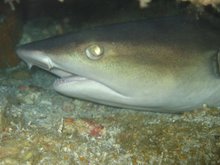
The shark species are all threatened by overfishing for sharks fin soup, for meat consumption and as a result of fishing bycatch. The bluefin tuna is overexploited to feed the worldwide sushi craze..

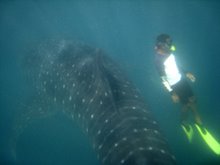
We hope that these inclusions are accepted and measures implemented as soon as possible. Inclusion of additional shark species (only the whale shark and basking sharks are currently protected) is important, the bluefin tuna is on the verge of complete collapse and efforts to protect this wonderful animal are too little but hopefully not too late.

There are often strong political resistence to expanding the list of protected animals.

Monday, 1 December 2008

The end of the Atlantic Bluefin tuna in sight?

ICCAT, the International Commission for the Conservation of Atlantic Tunas, is a group responsible for the management of fisheries for tuna and related species in the atlantic ocean. The group has enraged conservationists by setting a bluefin tuna fisheries quota for 2009 of 22,000 tonnes, this is 7,000 tonnes higher than scientific advice. Reports are mentioning that the EU skuppered plans by the US to impose the correct limit.


This is really a horrible situation, the death of a magnificent species is at hand.

My suggestion. Write to Joe Borg, EU Directorate-General for Maritime Affairs and Fisheries and/or ICCAT. Contact details as follows:

Joe Borg email Cabinet-Borg@ec.europa.eu

ICCAT at email info@iccat.int or to the following address


ICCAT SECRETARIAT
Corazón de María, 8.
28002 Madrid,
SPAIN


Interesting articles on this subject at the following URL's
Telegraph newspaper
Treehugger.com

European commission news release. Noticable for not mentioning the scientific advice.

Thursday, 6 December 2007

Hong Kong marine species struggling to survive

A recent study and press release from WWF-Hong Kong highlights the plight of some of Hong Kong's favourite marine species, including the green turtle, horseshoe crab and chinese bahaba.

Also worth noting is :

"the dire situation facing the globally Critically Endangered Chinese Bahaba and locally depleted Hong Kong Grouper, both well-known edible fish in Hong Kong, were largely unknown to the general public. Mr Alex Fong, Ocean's 10 Ambassador of WWF Hong Kong said, "The polling results show charismatic marine species such as the Chinese white dolphin and Green turtle have received far greater public attention than commercially important fishes"

Sounds like a familiar story. There is a need to focus on better protection not only on individual species but the setup and real complete protection of a variety of marine habitats.

The story from WWF can be found here: http://www.wwf.org.hk/eng/pressreleases/20071115.php?source=eNews200711_1

Wednesday, 13 June 2007

Chinese turtle boat with 397 dead sea turtles aboard discovered

May 8th , 2007. Chinese registered vessel with 397 dead and stuffed turtles aboard was found in the Indonesian waters around Kalimantan.


Source: http://www.turtle-foundation.org

In China turtles are considered a symbol of longevity and presumably these were destined as cheesy decorative pieces in office receptions and the bosses living room.

The following was the grusome findings from the seizure.

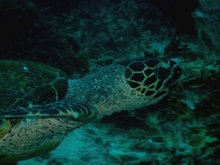
  1. 296 Hawksbill Turtles, a critically endangered species. Treated with formalin, size of carapace: 20 - 90 cm
  2. 90 Green Turtles, an endangered species treated with formalin, size of carapace: 20 - 90 cm
  3. 1 Olive Ridley Turtle, also an endangered species.
  4. 4 cans of formalin with 25 liters each, 100 Liter in total
  5. 17 nets with 38 cm nitting distance
  6. 3 giant mussels, approx. length: 100 cm
  7. 1 stuffed pufferfish
  8. 2 speedboats with 60-PS-engines

More information can be found on the Turtle Foundation website. By clicking HERE

Tuesday, 24 April 2007

Email feedback to WWF on their Seafood guide

With regards to the WWF Seafood guide. On the 10th April, I wrote an email to WWF (seafood@wwf.com.hk) with some initial comments on the Seafood Guide (click here to access guide )

The contents of the email was as follows:

"

  1. I like the guide, I think that this is a key step in the right direction. Consumer education is absolutely key and this is a good start.
  2. The common names are none standard. I am not familiar with the English names used on this guide. A side guide (maybe online) with photo’s would be helpful. I notice the URL Click HERE has many but not all of the fish listed on the Seafood Guide. Could this be gradually expanded to include all the fish on your guide?
  3. I am concerned about the wild caught Chilean Seabass being on the Recommended list, for two major reasons:

    - Chilean Seabass (also known as the Patagonian Toothfish) is fished (in many areas overfished) using long line fishing. This fishing method continues to be indiscriminate and has considerable side catch, this is resulting in a large decimation of albatross and seabird populations in the South Seas.

    - How can we know that the Chilean Seabass available in Hong Kong is from the MSC certified fisheries and not from other non sustainable sources..?

    - The Wikipedia entry summarises this adequately Click HERE

  4. It is a bit difficult to know where the fish are sourced when you are eating in a restaurant. Could you add some comments how what people can do in these cases. E.g. some questions that they could ask. If the right questions are asked then maybe restaurants would also start to source from sustainable sources.
  5. Are there any recommended sources for Shrimps/prawns. This is extremely popular in Hong Kong and a suitable alternative is needed. At the moment this is only in the AVOID category.
  6. Chinese Oysters are included, however I think that Globally sourced Oysters are also very popular in Hong Kong. Is there any plans to expand the guide to include these as well as other popular seafood ?
  7. For non Chinese I think a phonetic representation of the Cantonese pronunciation would be very helpful.

"

As of 24th April, I have not yet received a response.

WWF - Hong Kong

I have recently joined the WWF and after receiving the first edition of their members magazine 'About Life' I am certainly very impressed with the work and campaigns that they are running to help conserve the Marine environment both in Hong Kong and in South East Asia.

Two campaigns or releases of note:

Seafood Guide: Those that know me, understand that I have been concerned for many years about the restaurant trade in Live Seafood. This guide it the first real attempt at spelling out what Seafood is okay to eat (from a conservation/sustainability point of view) and what Seafood should be avoided. Have a look, there are definitely a few surprises:
Click HERE

Save our Seas ("SOS") We have all been out on Junk Trips and boat trips in Hong Kong and have been amazed at the number and location of fishing boats trawling in Hong Kong waters. WWF's Save our Seas campaign, aims to pressure the government to setup exclusive 'no take' zones that have proved so successful in other parts of the world. Read more here:
Click HERE