Sunday, 26 July 2009
Bluefin consumption in Hong Kong
Article can be found here
http://www.livingseas.hk/index.php?option=com_content&view=article&id=152:hong-kong-restaurants-to-stop-serving-bluefin-tuna&catid=53:hkconservation&Itemid=118
Thursday, 6 December 2007
Hong Kong marine species struggling to survive
Also worth noting is :
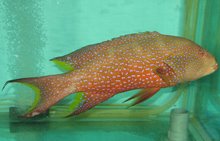
"the dire situation facing the globally Critically Endangered Chinese Bahaba and locally depleted Hong Kong Grouper, both well-known edible fish in Hong Kong, were largely unknown to the general public. Mr Alex Fong, Ocean's 10 Ambassador of WWF Hong Kong said, "The polling results show charismatic marine species such as the Chinese white dolphin and Green turtle have received far greater public attention than commercially important fishes"
Sounds like a familiar story. There is a need to focus on better protection not only on individual species but the setup and real complete protection of a variety of marine habitats.
The story from WWF can be found here: http://www.wwf.org.hk/eng/pressreleases/20071115.php?source=eNews200711_1
Tuesday, 23 October 2007
Hoi Ha Wan - A marine park in Hong Kong
Under Hong Kong legislation marine parks are protected to some degree,the following picture, taken in Hoi Ha, indicates the activities not allowed :

The key points are that fishing is still permitted in the Marine Parks, to licensed fishermen and that the park is not adequately policed. On a visit during the weekend of the 20th October 2007, I found the following character right on the beach under Hoi Ha Wan village and a stones throw from the AFCD office.

Unfortunately at the time I took this photo I could not tell that he had a seastar in his hand, otherwise I might have spoken to him, as he walked away I could see that he had a nine inch long divers knife, strapped to his leg. One can only guess what he was looking for, however what ever is it he should not be doing it..
There is a growing disquiet in Hong Kong about inadequate protection of marine life AND about the lack of knowledge about the issues. All things marine are seen as inexhaustible.
Monday, 8 October 2007
The Harm of Good Intentions - turtles
The argument of this article posted on the WWF Philippines blog puts forward a compelling argument as to why turtle hatchlings should be left and not collected, fattened up and then release later. Essentially the argument is as follows:
- Within the first 24 hours of life turtle instinct is to go out beyond the surf zone to catch major currents. They are carried to development areas where they remain until strong enough to migrate distances, it is during this period that the turtles learn about the currents and their migration routes. Key to their survival.
- The turtles reproduction process has proven very successful, without human intervention and has enabled the turtles to out live the dinosaurs.
Obviously turtles need a helping hand when human interference is affecting the survival, such as egg collection or fishing by catch but other than that, maybe we should leave them alone...?
Are they right..?
Full article can be found here:
http://newsfromkkp.blogspirit.com/archive/2006/03/21/the-harm-of-good-intentions.html
Monday, 17 September 2007
Malaysian ministry bans shark's fin soup
"Ministry bans shark's fin soup - Malaysiakini.com ( http://malaysiakini.com/ ) Sep 15, 07 4:16am
Malaysia's Natural Resources and Environment Ministry has struck off shark's fin soup from the menus at official functions, to help conserve the species, a report said today.
Minister Azmi Khalid told the official Bernama news agency that the ministry had made the commitment to the Malaysian Nature Society.
"By refraining from the consumption of shark's fin soup, it is hoped that the ministry would contribute in one way or another towards the current conservation efforts for sharks species," he said.
"Their demise would start off a domino effect, which at each stage could result in the depletion or overpopulation of other fish and marine species leading to an imbalance in the marine ecosystem," he said.
On preservation drive
The society's Selangor branch Marine Group is on a drive to encourage individuals and organisations to stop serving the delicacy at corporate functions.
The marine group had embarked on a series of activities and programmes to promote awareness on the plight of sharks and their importance to the marine ecosystem.
Malaysia's population is dominated by Muslim Malays, but there are also large ethnic Chinese and Indian communities."
What can be done to raise the awareness of this and to try to get other governments and ministries in the region follow suit...?
Monday, 10 September 2007
Dead blacktip shark in Hong Kong marine park
Check out the following story:
http://www.news.gov.hk/en/category/environment/070830/html/070830en04003.htm
This has opened up the debate about whether fishermen should be allowed to fish in marine parks. The HK government does allow a limited number of fishing permits to be issued annually.
I don't think any fishing should be allowed in designated marine parks.
Thursday, 5 July 2007
Alaskan fisheries authority react quickly and close down commercial fishing
Interesting article passed to me by Alison Bradley (thanks Alison) points to a link between climate change and the stalled recovery of the 'overfished' cod fisheries in the North West Atlantic.
This link in a report by the University of Massachusetts, has led to the North Pacific Fishery Management Council making history by "summarily prohibited any bottom-trawl commercial fishing off the far north of Alaska past the Bering Strait — at least until scientists figure out the effects of sea ice retreat and warming."
The full story can be found HERE
The fast action of the Alaskan fisheries authorities should be applauded, fast and decisive action from scientific evidence is needed in many others areas, here's a few that immediately come to mind:
- European fisheries in the North Sea and the Atlantic, near collapse.
- WWF-HK's call for no catch zones in Hong Kong waters. Setting up of marine parks has seen little recovery
- Bluefin tuna worldwide, a species now critically endangered.
- The live fish trade in South East Asia, both due to unhealthy fishing practices and overfishing.
- Shark finning, absolutely unsustainable.
Saturday, 2 June 2007
Conservation of sea turtles in Hong Kong
Actually a lot is done to protect the beach area during the potential nesting period, teams of volunteers and staff from the AFCD aim to make the beach as hospitable as possible and illegal entry onto the beach is subject to a maximum fine of HK$50,000.
More information can be seen click here
Friday, 1 June 2007
Green turtle nesting season is starting in Hong Kong
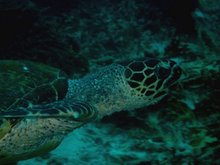
"The Green turtle nesting season has run from June to October in the past but numbers returning have dropped to perilously low levels in recent years. Ever since 2003, no Green turtles (Chelonia mydas) have nested at the Sham Wan beach on Lamma Island, which is the only site where Green turtles have nested regularly in recent decades. "
Source: WWF Hong Kong e-News 31st May
WWF also requests the following actions to encourage Green turtles to return
- Support WWF's Save our Seas (SOS) campaign to prevent our marine ecosystem, where marine turtles rely on, from collapsing.
- Beach visitors, divers etc should avoid disturbing any marine turtles in the water or at beaches identified for marine turtle nesting, i.e. Sham Wan and Tai Long Wan, as a passive effort to encourage turtles coming back to Hong Kong for nesting.
- Report any sightings to AFCD by calling 1823 during this coming June to October nesting period!
Thursday, 24 May 2007
Indonesia protects 900,000 hectares through network of Marine Protected Areas
Through the setting up of seven separate Marine Protected Areas (MPA's). A vast 900,000 hectares of tropical water are newly protected in the Indonesian archipelago of Raja Ampat. Raja Ampat is in the far east of Indonesia, bordering the Island of West Papua and is well know as Marine Biodiversity Hotspot. Click HERE for an overall map of the area.
This announcement by the Indonesian Minister of Marine Affairs and Fisheries Mr. Freddy Numberi, was as a result of efforts and campaigning of the local Fishing Communities and NGO's organisations such as Conservation International.
What has been happening in the recent past is that because of encroachment by non local commercial fishing boats in the area the local fishing communities have been suffering increasingly from reduced catches, threatening local livelihoods. Local communities will be jointly managing the MPA's.
The area can be visited and there are a number of liveaboard operators in the area (For example, MV Bidadari, who I dived with recently in Komodo, has a sister ship Sevens Seas, that operates in the area)
Full report from Conservation International, can be found Click HERE
Saturday, 28 April 2007
Komodo National Park - mooring buoy project
The Indonesian and Philippines archipelagos are the epicentre of the worlds marine biodiversity (exact location subject to some debate, try to google 'marine biodiversity epicentre' for some intriguing differences of opinions) Komodo is certainly a magical place, great diving, huge variety of things to see underwater and fantastic scenery above sea level. To add to this is the unique terrestrial ecology of Komodo and Rinca islands.
With the recent increase in dive boats operating in the Park, an extensive mooring buoy project was initiated by Helen Newman. This project had the active involvement of the diving community in Komodo and was completed in February 2007. Coincidently this was when I was diving in the Park on the live aboard dive boat, MV Bidadari. We were the first boat to utilise a few of the new buoys.

Ouch, the potential damage to reefs is
obvious
This is the kind of project that will make a real difference and is one piece that will help to ensure the survival of this unique marine reserve. Other challenges still exist, but that is another story.....
The full final report on the mooring buoy project can be read by clicking here
Are there any other worthwhile projects out there that should be mentioned?
Tuesday, 24 April 2007
WWF - Hong Kong
Two campaigns or releases of note:
Seafood Guide: Those that know me, understand that I have been concerned for many years about the restaurant trade in Live Seafood. This guide it the first real attempt at spelling out what Seafood is okay to eat (from a conservation/sustainability point of view) and what Seafood should be avoided. Have a look, there are definitely a few surprises:
Click HERE
Save our Seas ("SOS") We have all been out on Junk Trips and boat trips in Hong Kong and have been amazed at the number and location of fishing boats trawling in Hong Kong waters. WWF's Save our Seas campaign, aims to pressure the government to setup exclusive 'no take' zones that have proved so successful in other parts of the world. Read more here:
Click HERE